

About This Journal
About This Journal
-
Research Article
- Development of the new scoring system based on importance levels to improve the objectivity of HACCP evaluation of meat sales shop
- Hyun-Ho Shin, Seung-Hee Baek, In-Sik Nam
- Currently, more than 700 meat sales shop are implementing the HACCP (Hazard Analysis and Critical Control Points) system. The pre-requisite management program …
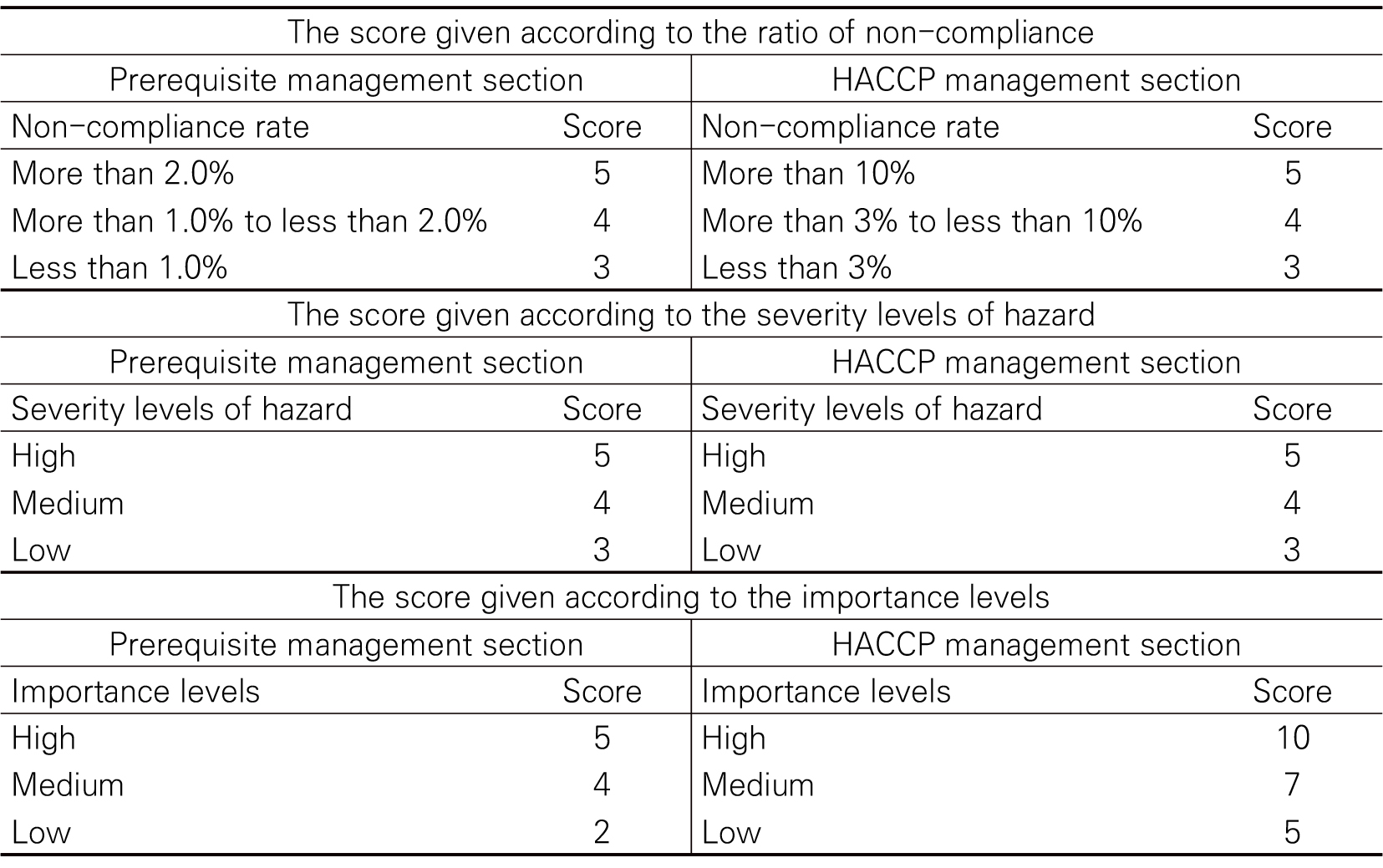
- Currently, more than 700 meat sales shop are implementing the HACCP (Hazard Analysis and Critical Control Points) system. The pre-requisite management program of HACCP evaluation standard in meat sales shop consists of 51 items. HACCP management program of HACCP evaluation standard in meat sales shop consists of 15 items. Therefore, the HACCP evaluation standard in meat sales shop consists of total 65 evaluation items. According to the recently revised HACCP evaluation standard of the meat sales store, the method of determining the results with the existing ‘○’, ‘△’, and ‘×’ was maximum 5 points for each item. A standard of judgment for evaluation standard are score 5 (good): without any mistake, consistent implementation of the field and record keeping according to the HACCP manual, score 3 (generally): some mistake but consistent implementation of the field and record keeping according to the HACCP manual, score 1 (inadequate): many mistakes and low implementation of the field and record keeping, and score 0 (executory): law violations, respectively. To assign a different score for each HACCP evaluation item, the severity of hazard and the rate of non-compliance in the past three years were analyzed. The results were as follows. Total score of pre-requisite management and HACCP management were changed to 180 score (pre-requisite management) and 100 score (HACCP management), respectively. If the results of this study are applied to HACCP inspection in the field of meat sales shop, it is expected that fair HACCP judgment will be possible by increasing the objectivity and rationality. - COLLAPSE
-
Technical Note

- Inactivation of foodborne microorganisms using an atmospheric pressure plasma sterilizer
- Woan-Sub Kim, Jeong Sam Park
- This study evaluated ozone generation and its bactericidal effects using an atmospheric pressure plasma sterilizer. Ozone concentration increased linearly with operating time, …
- This study evaluated ozone generation and its bactericidal effects using an atmospheric pressure plasma sterilizer. Ozone concentration increased linearly with operating time, reaching approximately 224 ppm at 60 min. At 30 min of ozone generation, Escherichia coli, Enterococcus faecalis, and Staphylococcus epidermidis exhibited increased reductions with longer retention times but were not completely inactivated, whereas Salmonella Enteritidis was fully inactivated after 20 min of retention. When ozone was generated for 60 min, all tested pathogens were completely inactivated even at short retention times. However, survival of Ent. faecalis was still observed at 50 min (215 ppm), indicating that microbial susceptibility may vary depending on cell wall characteristics. To examine applicability in food systems, eggs were treated under the effective condition (224.3 ppm, immediate exposure), and microbial reduction was observed, although the low initial contamination level limited clear verification of treatment efficacy. Ozone is recognized for its broad-spectrum antimicrobial activity against bacteria, yeasts, molds, and viruses, while maintaining product quality as a non-thermal process. The present findings support its potential as a residue-free sterilization method for food applications, although issues related to material corrosion, worker safety, and possible quality changes emphasize the need for further studies to optimize conditions and validate large-scale industrial applicability. - COLLAPSE
-
Review Article
- Deep learning-based image analysis techniques for fresh meat quality prediction
- Min Ji Koh, Hyeong Sang Kim
- The rapid evolution of generative artificial intelligence (AI) has opened new frontiers across diverse industries, including the traditionally conservative domain of meat …
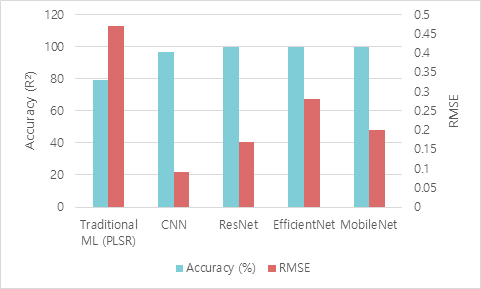
- The rapid evolution of generative artificial intelligence (AI) has opened new frontiers across diverse industries, including the traditionally conservative domain of meat processing. This review explores the emerging applications and transformative potential of generative AI in meat product development, quality control, automation, and system optimization. From image-based defect detection and predictive modeling to text-driven process standardization and cloud-integrated digital twins, generative AI technologies are redefining conventional meat science practices. We examine key technological advancements, such as the integration of computer vision and large language models (LLMs), their fusion with multimodal sensor data, and the shift toward intelligent, self-learning production environments. In parallel, we address the challenges of ethical data use, transparency, and sustainability when deploying AI systems in food chains. By synthesizing recent literature and industry examples, this review provides a comprehensive roadmap for future research and deployment of generative AI in meat processing. The integration of AI beyond simple automation not only enhances operational efficiency but also paves the way for smart, adaptable, and sustainable meat production systems that align with global digital transformation trends. - COLLAPSE
-
Review Article
- Trends in eco-friendly pet food processing technologies using insect protein and meat by-products
- Chan-Hui Gwak, Hyeong Sang Kim
- The pet food industry is experiencing rapid growth in response to increasing pet ownership and evolving consumer expectations for quality, functionality, and …
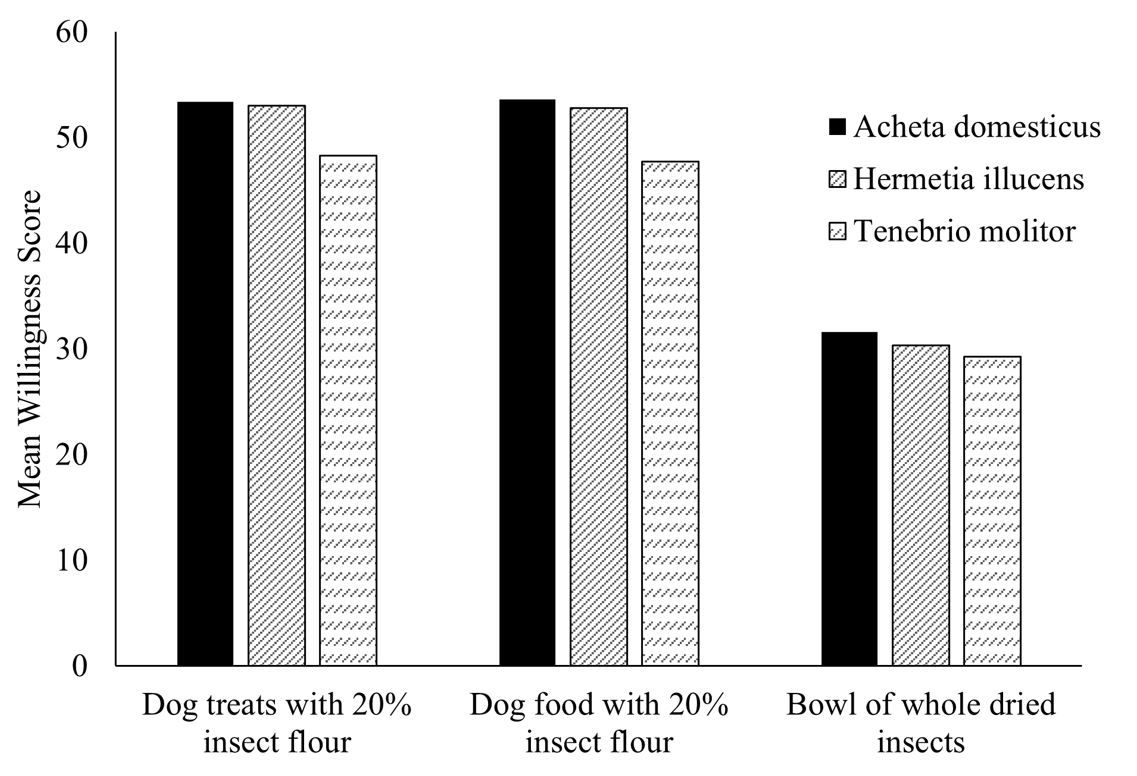
- The pet food industry is experiencing rapid growth in response to increasing pet ownership and evolving consumer expectations for quality, functionality, and sustainability. This review explores the application of meat by-products and insect protein—two emerging protein sources—in the development of environmentally friendly and nutritionally balanced pet food. Meat by-products offer high nutritional value and functional potential, yet their utilization has been limited due to safety and consumer perception issues. Meanwhile, insect proteins such as Tenebrio molitor and Hermetia illucens have gained attention for their superior protein content, essential amino acid profiles, and low environmental footprint. This paper outlines recent advancements in protein extraction, thermal processing, extrusion, and formulation strategies that improve the digestibility, palatability, and safety of these ingredients. Moreover, these novel ingredients align with the growing consumer demand for premium, sustainable, and functional pet food, particularly within aging and allergy-sensitive companion animals. Despite regulatory and consumer perception challenges, the integration of insect and by-product proteins demonstrates significant potential to reduce carbon emissions, recycle underutilized resources, and deliver cost-effective yet nutritionally advanced pet food solutions. The integration of smart processing and circular economy approaches highlights the future potential of sustainable pet food technologies. This review aims to provide a multidisciplinary overview and offer strategic directions for future research, policy development, and industrial application of alternative protein-based pet foods. - COLLAPSE

 Journal of Humanimal Sciences